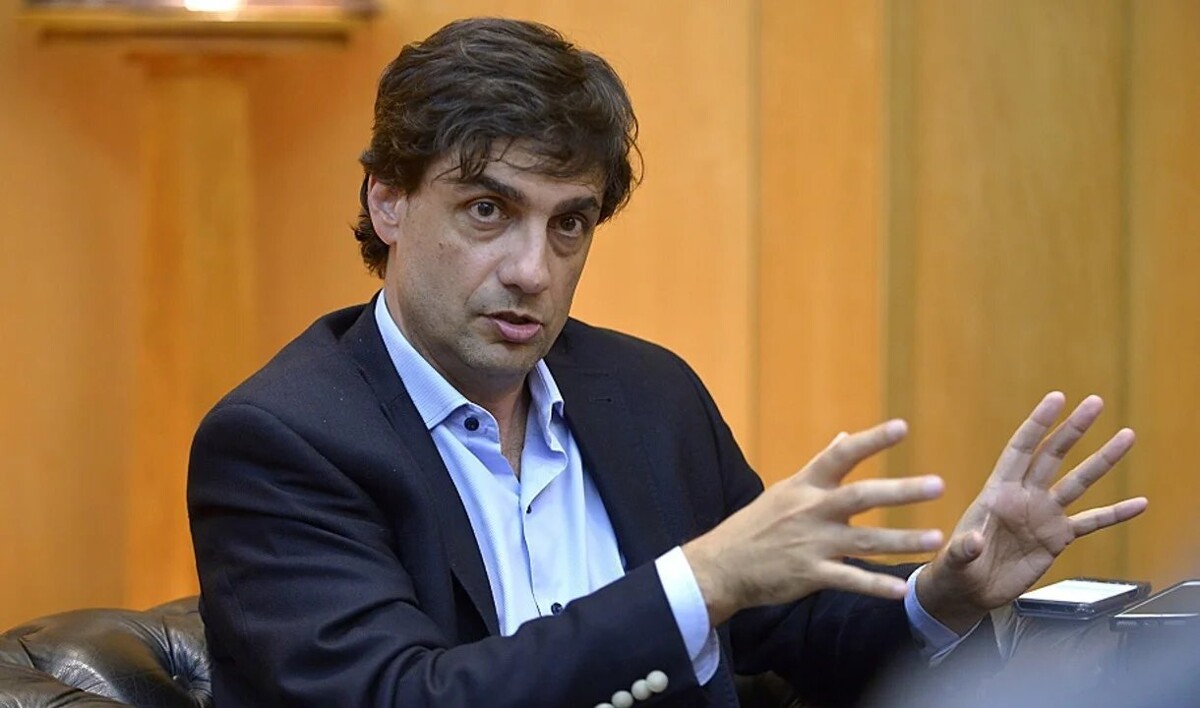
Buenos Aires, February 15 (NA) – “The government avoided a major crisis, but now it faces the challenge of reactivating a stagnant economy,” stated former Minister Hernán Lacunza when analyzing the current economic course. “But I do believe this reform helps ensure that when growth arrives, it translates into jobs,” he explained. “This was resolved by tackling the fiscal hole financed by money printing,” he indicated. “Families and companies use this information to make decisions.”
IP
Finally, he valued the officials' pragmatism in negotiating the labor reform, even with concessions. “Five is worse than eight, but it's better than zero,” he graphed. “Disinflation processes in the world take years,” he explained, and attributed part of the initial drop to the use of the exchange rate as an anchor.
He also questioned the inclusion of last-minute changes, such as the salary reduction in cases of work-related accidents. “It's quite controversial and couldn't be properly debated,” he stated.
Regarding the general outlook, he maintained that the current administration managed to clear critical risks. “Two years ago, the challenge was to avoid hyperinflation or a banking problem. Now, what's missing is for growth to appear,” he concluded.
While he highlighted the macroeconomic stabilization achieved by attacking the fiscal deficit and monetary issuance, he warned that disinflation has slowed down and that economic activity shows strong sectoral disparities.
Asked about the labor reform approved in the Senate, he considered it “a step in the right direction.” He argued that the current legislation “is obsolete, it's five decades old, and labor relations have changed a lot,” so modernizing it would reduce informality and provide more predictability in hiring. “The original project was more ambitious and some things were left behind in political negotiations, but it still has enough critical mass to be an advance,” he noted in dialogue with Splendid AM 990.
However, he clarified that the norm alone will not generate employment. “Employment depends on growth, and growth depends on investment and the general conditions of the economy. It cannot be decided based on the communicational convenience of the government in power,” he stated. And he added: “It doesn't matter if the new measurement gives more or less inflation. The only thing that matters is that it's more accurate.
He highlighted that inflation fell from levels above 200% annually to around 30%, although he emphasized that “it remains high” and that the disinflation process “is not linear.” Regarding the latest monthly data, he acknowledged that the slowdown lost momentum. “It's easier to go down from 20 to 3 than from 3 to 0,” he said. “That gave quick results, but it was not sustainable indefinitely,” he added.
According to what Noticias Argentinas agency could find out, Lacunza also described a “flat” economy, with dynamic sectors such as energy, mining, or agriculture, and others in decline, especially industry and construction. “The sectors that are winning today are not big job generators, and the ones that are losing are,” he warned, and pointed out that the impact is also regional, with benefits concentrated in hydrocarbon and agricultural areas versus a more affected metropolitan area.
Regarding the update of the price index and changes in the statistical agency, he defended technical autonomy. “Official statistics are a public good. In his view, the challenge ahead will be to consolidate stability without giving up transparency or hindering investment. “Stabilization was a necessary condition.”